Key takeaways
- A high flag means the laboratory has marked the result for attention, but the flag alone does not explain its cause.
- Creatinine and eGFR are related, but they are not interchangeable names for the same reported number.
- Checking urine for albumin can provide information that is different from the blood test.
- Bring earlier laboratory reports with their dates; a result becomes more useful when its timing is clear.
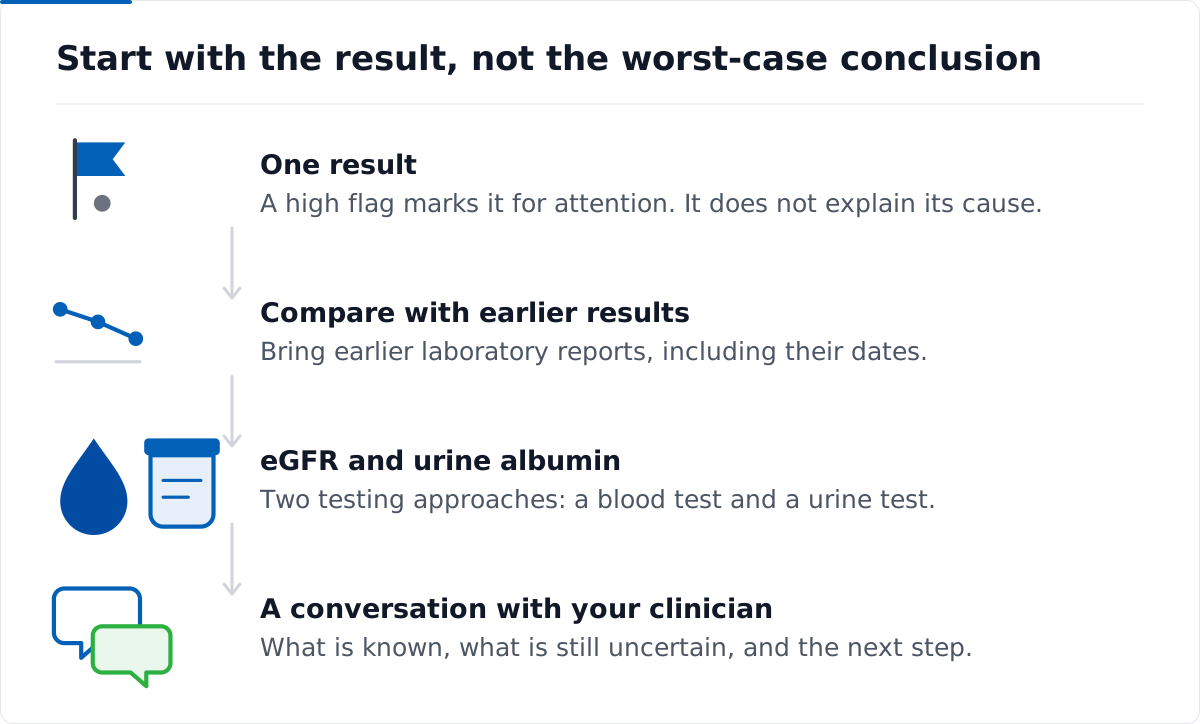
Start with the result, not the worst-case conclusion
Seeing a high flag beside creatinine can be unsettling. It means the laboratory has marked the result for attention, but the flag alone does not explain its cause or tell you what will happen next. Your clinician needs to interpret the number alongside your health history, earlier results and other tests. One isolated result is not enough to write your entire kidney-health story.
Creatinine is a waste product measured in blood as part of assessing kidney filtering.[1] The NIDDK testing overview explains how a blood test is used to estimate the glomerular filtration rate, usually shortened to eGFR.[2] Creatinine and eGFR are related, but they are not interchangeable names for the same reported number. Ask which result your clinician is discussing if the report lists both and the explanation is unclear.
Why the earlier results matter
A result becomes more useful when its timing is clear. Your clinician may want to know whether a previous test showed something similar or whether this is a new finding. Bring any available earlier laboratory reports, including their dates, rather than relying on memory or a screenshot that leaves out the test name and units. If this is your first measurement, explain that there may not be an earlier result to compare.
Do not assume that a single high creatinine result proves chronic kidney disease, or that an earlier normal result settles the current question. Those conclusions require interpretation of the full picture. Your clinician can explain whether more information is needed and what a follow-up assessment is meant to clarify. This article intentionally does not provide a universal “safe” or “dangerous” creatinine cutoff.
A blood test is not the whole kidney assessment
The NIDDK overview describes two important testing approaches: estimating filtering with a blood test and checking urine for albumin. Albumin is a protein; finding it in urine can provide information that is different from the blood test. A conversation focused only on creatinine may therefore leave part of the assessment unexplained. Ask whether urine testing has been done and how its result fits with the blood work.
This does not mean everyone with a flagged result needs the same set of tests. The purpose of asking is to understand the plan, not to order your own workup. You should be able to leave the discussion knowing what is known, what is still uncertain, and who will contact you about any next steps.
Prepare a useful conversation
Write down when the test was taken, why it was ordered, and whether you have noticed any change in how you feel. Have an up-to-date list of medicines and supplements available for the clinician reviewing the result. These details provide context; this article does not tell you that a particular medicine, food or activity caused your result, or direct you to change treatment yourself.
Questions worth bringing include: “How does this compare with my earlier results?” “What does my eGFR mean in this situation?” “Do we have a urine albumin result?” and “What is the next step, and when should I hear back?” If you have been given specific follow-up instructions, clarify anything you do not understand with the team that ordered the test.
Understand the role of a kidney specialist
Sometimes the clinician reviewing a result may recommend nephrology input to help answer an unresolved kidney question. A referral is not a prediction of dialysis or a promise about the outcome. Our when-to-see-a-nephrologist article and CKD service information explain the practice’s role. Use contact information for appointment coordination, not for emergency assessment. This article is educational and does not diagnose the cause of your laboratory result.
Questions to ask your care team
- How does this compare with my earlier results?
- What does my eGFR mean in this situation?
- Do we have a urine albumin result?
- What is the next step, and when should I hear back?