Key takeaways
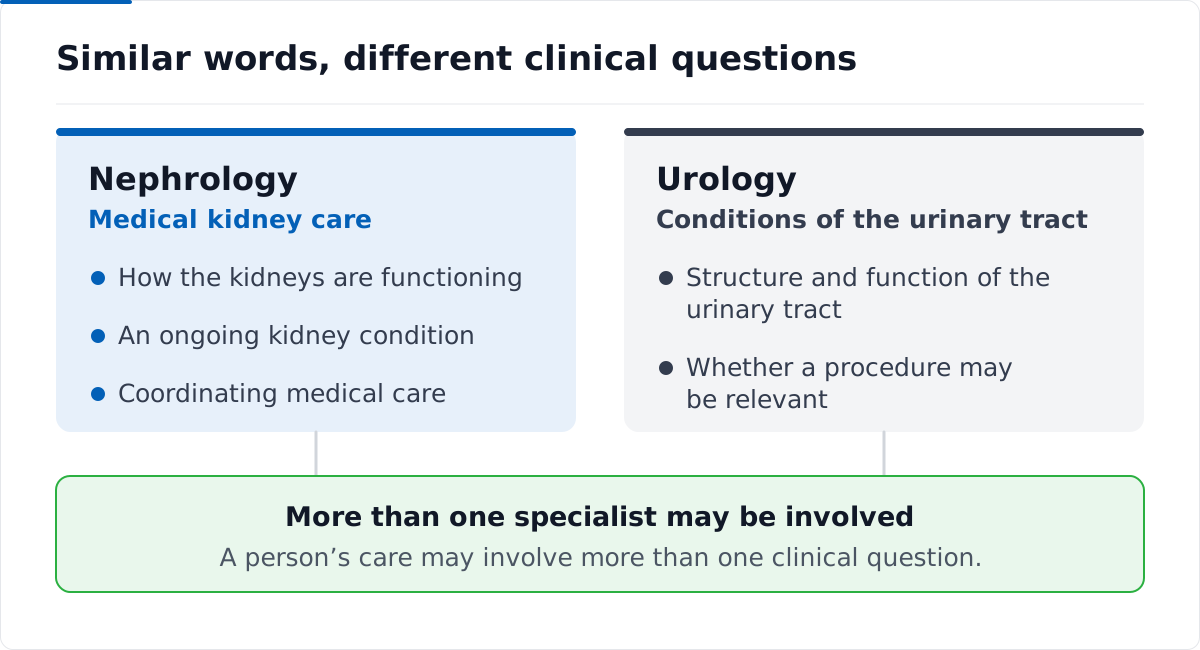
- Nephrology focuses on medical kidney care, while urology addresses conditions of the urinary tract, including problems that may need procedural or surgical evaluation.
- The reason for referral matters more than the name of the body part on a report.
- Being asked to see another specialist does not necessarily mean an earlier clinician missed something.
Similar words, different clinical questions
Nephrology and urology both involve parts of the body people associate with urine and the kidneys. That overlap can make a referral confusing. A useful starting distinction is that nephrology focuses on medical kidney care, while urology addresses conditions of the urinary tract, including problems that may need procedural or surgical evaluation. This is a general orientation, not a rule that can assign every symptom or test result to one specialty.
The reason for referral matters more than the name of the body part on a report. “A kidney problem” may describe several different clinical questions. Before deciding that the referral is wrong, ask the referring clinician what question the specialist is meant to answer. That explanation can make the appointment more useful and reduce the need to guess from unfamiliar terms.
Questions about kidney function
An assessment of kidney health may include a blood test that estimates filtering and a urine test for albumin. The NIDDK testing overview explains why these provide different information.[1] If the referral concerns how the kidneys are functioning or an ongoing kidney condition, the clinician can explain the role of nephrology in evaluating that question and coordinating medical care.[2]
A laboratory result does not automatically determine which appointment is needed. Earlier results, the rest of the history and the question under review all matter. Ask whether the referral is for clarification of a finding, advice about ongoing care, or another stated reason. A high flag on a report is not enough information for a website to choose your specialist.
Questions about the urinary tract
Urology is often discussed in relation to the structure and function of the urinary tract and whether a procedure may be relevant. That does not mean that every urology appointment leads to an operation. It also does not mean that every concern involving urine belongs exclusively to urology. A person’s care may involve more than one clinical question, and the boundaries should not be reduced to a simple “blood test versus urine symptom” shortcut.
Why more than one specialist may be involved
Different clinicians can contribute to different parts of an assessment. Being asked to see another specialist does not necessarily mean an earlier clinician missed something, and it does not by itself establish that a condition is more serious. The important question is how the care is being coordinated and which team will explain the next step.
If two referrals are being considered, ask what each visit is intended to address. Also ask who should receive the resulting reports. Clear communication is more useful than assuming that both visits will be identical or that one automatically replaces the other. This article cannot determine whether an individual patient needs one specialist, both, or neither.
Prepare for the visit you have been offered
Bring the referral reason, available test reports with dates, and a current medication list. Write down your main question in ordinary language. It is fine to say that you do not understand the distinction between the specialists; that is a reasonable thing to clarify before or during the appointment.
For information about this practice, read the when-to-see-a-nephrologist article and CKD service page. Referring offices can use the clinician referral page; patients can find appointment coordination details on contact. These links do not provide emergency triage or establish that TKE supplies urology services. This article is educational, does not diagnose a condition, and gives no treatment or outcome promise.
Questions to ask your care team
- What question is the specialist meant to answer?
- Is the referral for clarification of a finding, advice about ongoing care, or another stated reason?
- If two referrals are being considered, what is each visit intended to address?
- Who should receive the resulting reports?